A Comprehensive Overview to the Various Types and Use Light Weight Aluminum Shop
The world of light weight aluminum foundry incorporates various casting techniques, each offering distinct applications. From the flexibility of sand casting to the precision of die casting, these methods deal with different manufacturing demands. Financial investment spreading supplies elaborate styles, while permanent mold spreading highlights toughness. Understanding the features of light weight aluminum alloys is important for enhancing these procedures. Exploring the subtleties of each casting method exposes vital insights for reliable task execution. What variables should one consider when picking one of the most suitable technique?
Summary of Aluminum Foundry Processes
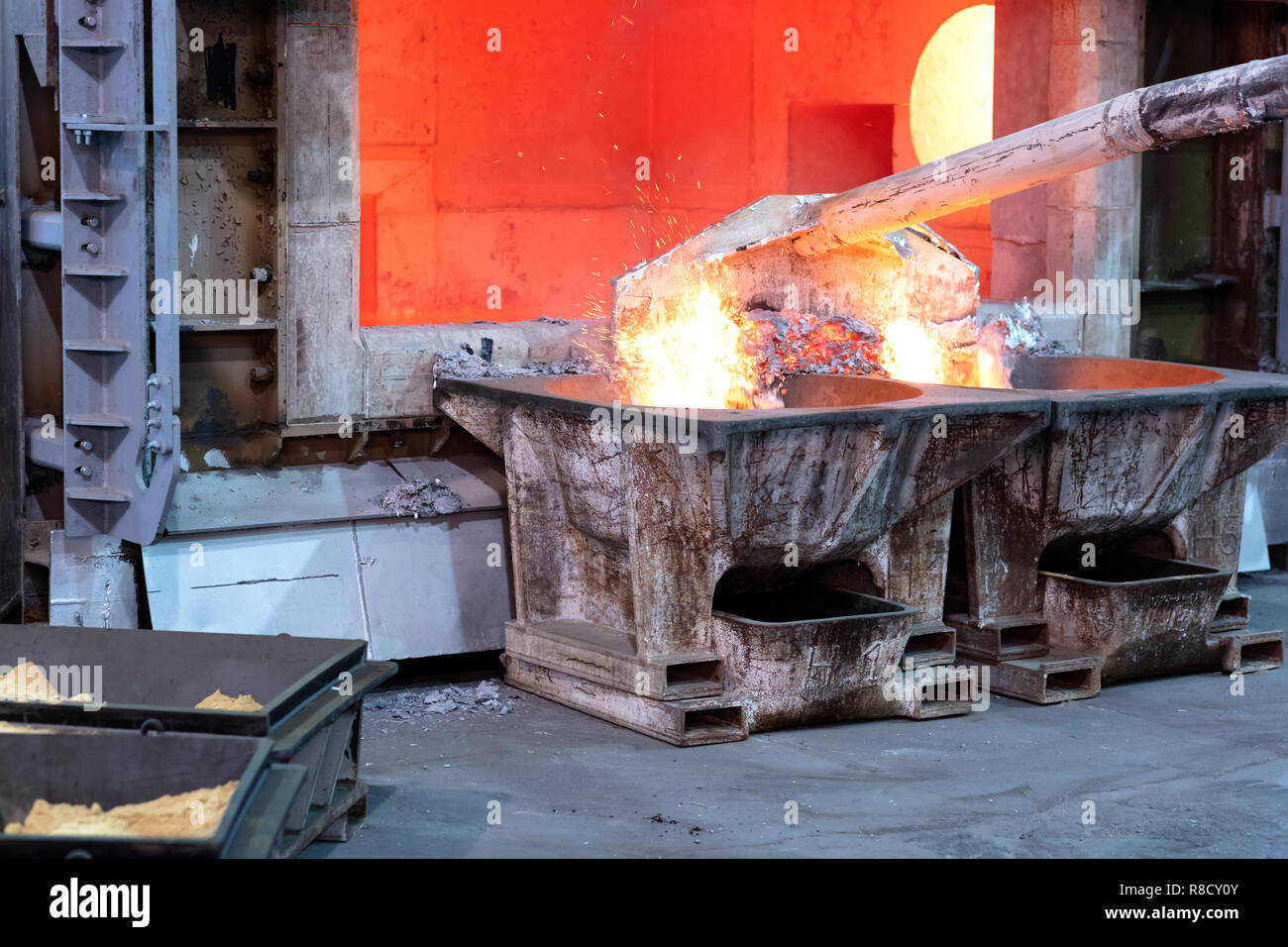
Light weight aluminum foundry procedures encompass a collection of strategies made use of to cast and shape light weight aluminum right into various forms. These procedures can be extensively classified right into melting, molding, and finishing. The initial action entails melting light weight aluminum, usually carried out in furnaces that get to heats to attain a liquid state. Once thawed, the aluminum is put into molds, which define the last shape of the actors item.
Numerous molding strategies exist, such as die casting and financial investment casting, each offering distinct benefits depending upon the wanted precision and intricacy of the last product. After the aluminum has actually cooled and solidified, the spreading goes through completing processes, which may include machining, surface treatment, and setting up. These actions guarantee that the final item meets specific resistances and surface top quality criteria. Together, these procedures form an extensive strategy to light weight aluminum casting, accommodating varied industrial applications and item requirements.
Sand Casting in Aluminum Foundries
Sand casting is an essential process in aluminum foundries, identified by its use sand mold and mildews to form liquified steel. This method supplies numerous benefits, consisting of cost-effectiveness and convenience, making it appropriate for a variety of commercial applications. Comprehending the ins and outs of the sand spreading process is important for maximizing production and accomplishing wanted product residential properties.
Sand Spreading Process Review
The sand casting process works as an essential approach in light weight aluminum factories, facilitating the creation of intricate steel components. This procedure starts with the prep work of a sand mold and mildew, which is created by condensing sand around a pattern that stands for the final product. As soon as the mold is constructed, molten aluminum is put right into the dental caries, enabling it to form. After cooling, the mold and mildew is escaped to reveal the cast component. Sand casting is remarkable for its convenience, suiting numerous shapes and dimensions, from little parts to large frameworks. In addition, this method enables the incorporation of complicated styles, making it a preferred choice for lots of sectors needing customized light weight aluminum parts.
Advantages of Sand Spreading

Applications in Industries
Casting procedures play an important function in various industries, with sand spreading being a popular technique for aluminum applications. This method is extensively used in auto manufacturing, permitting the production of engine blocks, transmission situations, and different architectural components. Additionally, the aerospace industry leverages sand spreading to produce light-weight yet sturdy components, contributing to sustain effectiveness and performance. The electrical market also takes advantage of sand-cast light weight aluminum components, such as units and real estates, which supply durable defense for delicate tools. Furthermore, the building and construction sector employs sand casting for architectural aspects and components, showcasing light weight aluminum's versatility. Generally, sand spreading in aluminum shops serves several industries, conference varied needs while enhancing material homes and production performance.
Pass Away Casting Techniques and Applications
Pass away casting is a precision production procedure made use of to produce intricate steel get rid of high dimensional precision and superb surface finishes. This strategy entails requiring molten light weight aluminum into a mold under high pressure, guaranteeing that even elaborate designs can be reproduced with impressive uniformity. 2 key die casting techniques are warm chamber and cool chamber die spreading. Warm chamber die casting is appropriate for metals with reduced melting factors and enables faster production cycles, while cold chamber pass away spreading is ideal for higher melting factor metals and supplies better control over steel circulation.
Applications of die spreading period various markets, including auto, aerospace, and electronic devices. Components such as engine blocks, brackets, and real estates take advantage of the strength and lightweight homes of light weight aluminum. The adaptability and efficiency of die casting make it an essential procedure in generating high-grade light weight aluminum components that meet stringent market standards.
Financial Investment Casting: Accuracy and Information
Financial investment spreading is an innovative production process known for its ability to generate detailed components with high accuracy. This method locates applications throughout numerous markets, including aerospace and auto, where information is vital. The advantages of financial investment spreading, such as lowered product waste and enhanced surface area finish, make it a favored option for lots of engineers.
Process Summary and Techniques
Making use of investment casting, producers achieve extraordinary precision and complex information in aluminum components. This process starts with creating a wax pattern, which is covered in a ceramic shell. As soon as the shell hardens, the wax is melted and drained pipes, leaving a dental caries for the molten aluminum. The light weight aluminum is then poured into the mold, enabling complex geometries and great features. After cooling, the covering is damaged away, disclosing the aluminum component. Techniques such as vacuum financial investment spreading boost accuracy by minimizing air entrapment, while stress spreading provides enhanced surface coating. This thorough process not only guarantees dimensional accuracy but also decreases product waste, making it a reliable choice for generating top quality aluminum elements in different markets.
Applications in Industries
The exceptional precision and elaborate detail accomplished through investment spreading make it a favored technique in different industries. This technique is particularly popular in aerospace, where parts call for complex geometries and tight tolerances. In the auto field, investment casting is utilized for producing components like engine blocks and transmission real estates, making sure durability and performance. In addition, the clinical market benefits from financial investment spreading to produce specialized tools and implants that fulfill rigid regulative requirements. The flexibility of aluminum shop investment casting enables the production of light-weight yet strong parts, making it appropriate for electronics and durable goods also. Overall, financial investment casting remains to play an important role in boosting product top quality across varied applications.
Advantages of Financial Investment Casting
When precision and complex detail are vital, investment spreading sticks out as a very beneficial production method. This method permits the creation of intricate geometries with tight resistances, making it ideal for applications calling for high accuracy. The process entails creating a wax design that is covered in a ceramic shell, which is after that warmed to remove the wax and solidify the covering. This results in a mold that Aluminum Foundry records great details remarkably well. Additionally, financial investment spreading minimizes material waste, as it can create near-net forms, reducing the requirement for considerable machining. The versatility of materials utilized, consisting of various aluminum alloys, even more improves its allure, making it a recommended choice in industries such as aerospace and vehicle.
Long-term Mold Casting: Stamina and Longevity
Various casting methods exist, permanent mold spreading stands out for its capability to create elements with extraordinary strength and toughness. This technique makes use of a multiple-use mold and mildew, commonly made from metal, which enables fast heat transfer and improved mechanical homes in the cast product. The process results in a fine-grained framework, improving stamina while decreasing porosity compared to sand casting.
Irreversible mold and mildew casting is particularly advantageous for generating components requiring high tensile strength and exhaustion resistance, making it appropriate for vehicle and aerospace applications. The regulated air conditioning rate in the mold and mildews adds to uniformity in the microstructure, further boosting the sturdiness of the components. Furthermore, this method can achieve intricate styles and tight tolerances, which are vital in high-performance applications. Overall, permanent mold and mildew casting supplies a trustworthy service for manufacturers looking for lasting and durable aluminum elements.
Common Light Weight Aluminum Alloys and Their Qualities
Recognizing the numerous light weight aluminum alloys is essential for makers aiming to improve efficiency in long-term mold and mildew casting applications. A number of usual aluminum alloys display distinct attributes matched for particular usages.
For applications needing great and light-weight resistance to warm, the 6061 alloy is favored for its flexibility and weldability. On the other hand, the 7075 alloy, understood for its high strength-to-weight proportion, is mainly utilized in aerospace applications. Each alloy provides one-of-a-kind benefits that producers should think about to assure peak efficiency in their particular applications.
Picking the Right Light Weight Aluminum Foundry Process for Your Task
Selecting the suitable light weight aluminum factory process is crucial for attaining excellent lead to any production task. Different techniques, such as sand casting, pass away spreading, and investment spreading, offer distinctive benefits customized to particular needs. Sand casting is versatile and cost-effective for big components, while die casting masters generating high-volume, dimensionally accurate components. Financial investment casting is favored for intricate layouts and superior surface area coating.
Factors affecting the option of process include the preferred intricacy, manufacturing volume, and budget plan restraints. In addition, the certain light weight aluminum alloy picked may determine the appropriate procedure, as particular alloys perform better under certain casting problems. Understanding the job's demands and the qualities of each approach helps in making a notified decision. Ultimately, selecting the appropriate aluminum factory process not just improves product top quality however also maximizes production performance, causing successful end results in making undertakings.
Regularly Asked Questions
What Industries Largely Utilize Light Weight Aluminum Foundry Products?
Aluminum factory items are mainly made use of in the automobile, customer, construction, and aerospace products sectors. These industries take advantage of aluminum's light-weight, corrosion-resistant residential properties, making it an optimal selection for various applications and elements.
Just How Does Aluminum Recycling Impact Factory Procedures?
Aluminum recycling considerably enhances foundry operations by minimizing raw material costs, lessening waste, and advertising sustainability. It allows foundries to create top quality light weight aluminum items while reducing energy intake and ecological influence during the manufacturing process.
What Are the Environmental Considerations in Light Weight Aluminum Foundries?
Ecological factors to consider in light weight aluminum shops consist of power consumption, greenhouse gas emissions, waste management, and resource sustainability. Effective techniques can lessen eco-friendly impacts, boost reusing initiatives, and promote cleaner production techniques, making sure an equilibrium between market and environmental health.
How Can I Guarantee Quality in Aluminum Castings?
To assure top quality in light weight aluminum spreadings, one need to carry out rigid quality assurance steps, utilize precise molding techniques, display temperature level and alloy structure, and carry out extensive assessments throughout the spreading process to recognize and fix prospective problems. Aluminum Foundry.
What Are the Common Defects in Light Weight Aluminum Castings?
Usual problems in aluminum spreadings include porosity, shrinking, inclusions, surface area flaws, and dimensional inaccuracies. These concerns can arise from incorrect mold and mildew layout, insufficient pouring strategies, or inadequate alloy structure, inevitably impacting the casting's general performance and quality.
From the adaptability of sand casting to the accuracy of die casting, these approaches cater to various production needs. Investment spreading provides intricate styles, while long-term mold and mildew casting highlights strength. Methods such as vacuum investment casting enhance precision by minimizing air entrapment, while pressure spreading offers boosted surface coating. Numerous techniques, such as sand casting, die spreading, and investment casting, deal unique benefits tailored to certain requirements. Sand casting is functional and cost-effective for big components, while die spreading excels in creating high-volume, dimensionally specific components.
Comments on “Understanding Aluminum Foundry and the value for contemporary applications”